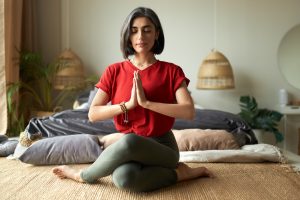

Struggling with menopause symptoms like hot flashes or insomnia? Discover how yoga for menopause, through simple yoga poses, can ease discomfort and support your hormonal health naturally.
Menopause Isn’t a Crisis—But It Can Feel Like One
One day you’re going about your business, and the next, you’re wondering if someone turned the thermostat up to lava. Hot flashes. Mood swings. Sleepless nights. Welcome to menopause.
While it’s a natural transition, it can be deeply uncomfortable. And while hormone therapy works for some, many women are turning to gentler, holistic tools—like yoga for menopause—to help them ride the wave with grace (and fewer sweat-soaked T-shirts).
How Yoga Supports You Through Menopause
Menopause impacts your nervous system, hormone balance, sleep, digestion, and emotional state. Yoga works on all these fronts, without side effects.
Practicing yoga regularly can:
- Reduce hot flashes
- Improve sleep and relaxation
- Ease anxiety and mood swings
- Support bone health and posture
- Help manage weight gain around the belly
Best of all? You can start with just 10 minutes a day.
Yoga for Menopause: 3 Gentle Poses for Real Relief
You don’t need to be bendy or experienced to benefit from yoga. These beginner-friendly poses focus on calming the nervous system and cooling the body.
1. Child’s Pose (Balasana)

Why it helps: Soothes the adrenal glands and gently opens hips. The child’s pose also helps to stretch your back and muscles around your hips.
How: In this pose, kneel and sit on your knees. Lean forward, keeping your buttocks on your heels, and rest your forehead on the floor. Move your arms so they’re next to your legs, palms facing up. Breathe deeply for 2–5 minutes.
2. Cat-Cow Stretch (Marjaryasana-Bitilasana)

Why it helps: Relieves lower back stiffness and supports spinal mobility.
How: Inhale deeply while curving your lower back and bringing your head up, tilting your pelvis up like a “cow.” Exhale deeply and bring your abdomen in, arching your spine and bringing your head and pelvis down like a “cat.” Repeat several times. Sync with breath. Do 1–2 minutes daily.
If you have a wrist, arm, shoulder, or knee injury, avoid doing the cat-cow pose. If you suffer from neck pain, keep the neck in a neutral position. For those with intense back pain, either avoid this pose or only do it with an experienced certified yoga teacher’s guidance.
3. Legs-Up-the-Wall (Viparita Karani)

Why it helps: Cools the body, eases swelling in feet, calms anxiety.
How: Lie on your back and rest your legs vertically against a wall. Support your lower back with a cushion. Stay here 5–10 minutes.
Bonus: Add Cooling Breathwork
Sitali Pranayama, also known as “cooling breath,” is a yogic breathing technique designed to cool the body and calm the mind. It involves inhaling through a curled tongue (or, if unable to curl, through the teeth) as if sipping or drinking air, and then exhaling through the nose. This practice is believed to have a soothing effect, especially during hot weather. It physically reduces body temperature and soothes frayed nerves.
But What About Weight, Bone Health, and Mood?
Yoga helps here, too.
- Strength-building poses (like Warrior or Bridge Pose) support bone density, especially important after estrogen levels drop.
- Mindfulness during yoga reduces cortisol levels and stress eating.
- Group classes or online sessions create a sense of community, reducing the emotional isolation that often comes with this life stage.
Sleep Better with a Wind-Down Routine
Yoga before bed can improve sleep quality. Try this sequence:
- Forward Fold (1 min)
- Cat-Cow (2 min)
- Seated Twist (1 min each side)
- Legs-Up-the-Wall (5 min)
- Slow breathing (3–5 min)
Put on soft lighting and play calming music or nature sounds to make it a full ritual.
Final Thoughts
Menopause doesn’t have to be miserable. Yoga for menopause offers a gentle, empowering way to reconnect with your body and take back control of your well-being. It’s not about flexibility—it’s about relief, resilience, and reclaiming your calm.
Try one pose today. Your future self will thank you.