
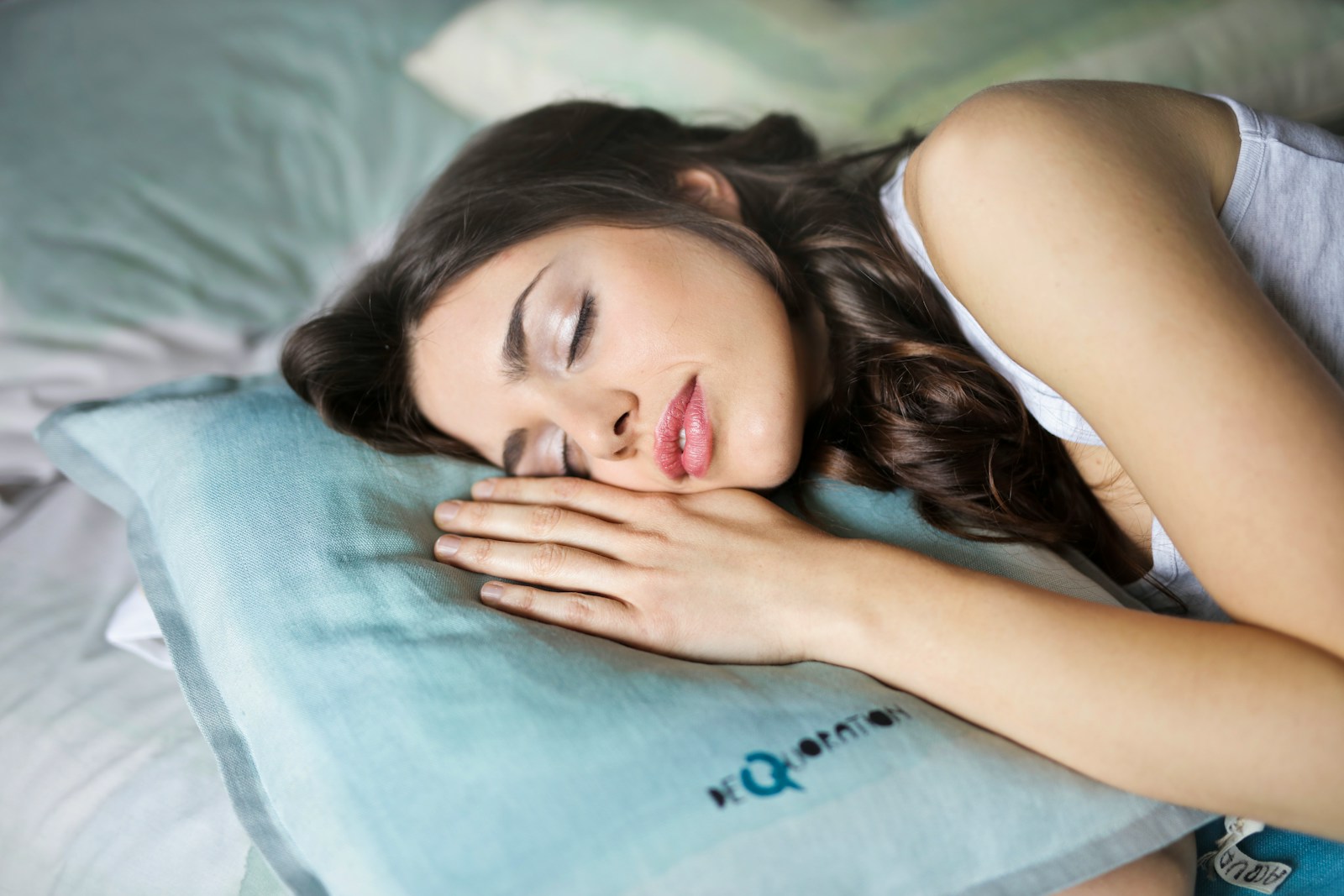
We talk about eating well, exercising, and managing stress, but how often do we talk about sleep? Good sleep isn’t just “nice to have.” It’s the foundation for your mood, focus, energy, and even your ability to handle life’s ups and downs.
Yet so many of us drag ourselves through the day on too little rest, convinced we can “catch up” over the weekend. (Spoiler: it doesn’t quite work that way.) That’s where sleep hygiene comes in — simple, intentional habits that set the stage for better nights and calmer days.
What Exactly Is Sleep Hygiene?
The term “hygiene” might sound clinical, but here it simply means cleaning up your sleep habits. Sleep hygiene is about creating the right conditions — both in your bedroom and your routine — so your body can slip into deep, restorative rest naturally.
Think of it as brushing your teeth for your sleep: small, consistent actions that protect something vital.
Why Your Sleep Might Be Suffering
If you toss and turn at night or wake up feeling groggy, you’re not alone. But poor sleep isn’t always just “bad luck.” Often, everyday habits quietly sabotage us:
- Erratic bedtimes. Your body thrives on rhythm. Going to bed at wildly different times confuses your internal clock.
- Screens before bed. Phones, tablets, and TVs emit blue light that tricks your brain into thinking it’s daytime.
- Late meals and caffeine. A late-night curry or that 5 p.m. coffee might be keeping you wired.
- Stress and racing thoughts. When your mind is full of “Did I reply to that email?” and “What if I forgot something?” sleep has no room to sneak in.
The good news? Almost all of these are fixable with mindful tweaks.
The Truth About Sleep Debt
We often think we can “catch up” on sleep later, but sleep doesn’t quite work like a bank account.
Sleep debt is what happens when you consistently get less sleep than your body needs. If you need 7–8 hours but only get 5–6, the shortfall accumulates, and your body feels it. Symptoms include:
- Feeling groggy even after a long night’s sleep
- Irritability or low mood
- Foggy focus and poor memory
- Cravings for sugar and caffeine
A weekend lie-in can help a little, but it won’t fully “repay” the debt. The real solution is consistently good sleep hygiene — a steady, predictable routine that keeps your body in balance.
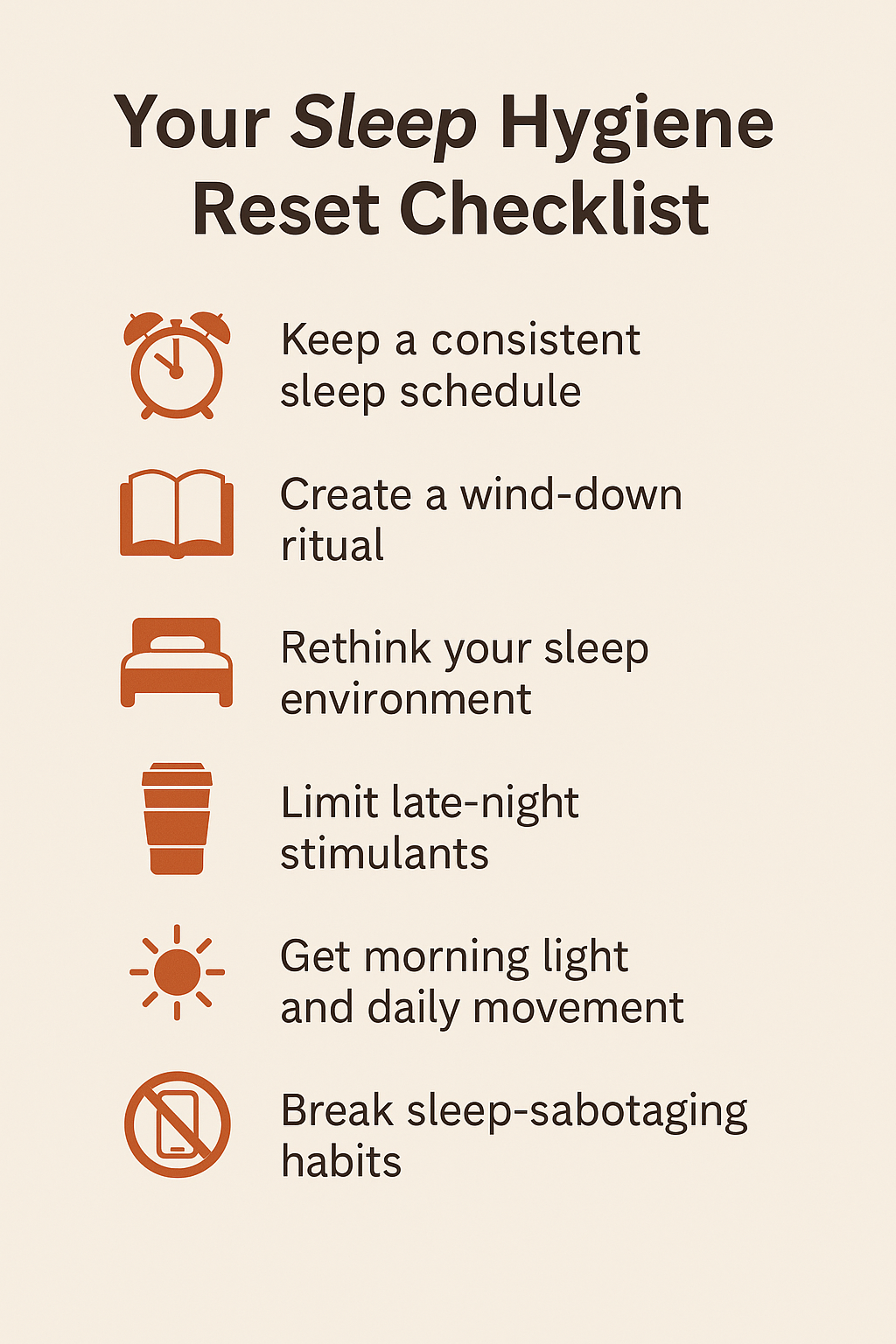
The Sleep Hygiene Blueprint: Habits That Actually Help
Keep a consistent sleep schedule
Your body loves rhythm. Going to bed and waking up around the same time every day (yes, even weekends) resets your internal clock. Over time, you’ll start to feel naturally sleepy at bedtime — and alert when you wake.
Create a wind-down ritual
Sleep doesn’t arrive the second you switch off the light. It needs an invitation. Try:
- Reading something calming (not a thriller)
- Journaling to empty your thoughts onto paper
- Gentle yoga or stretches to release tension
- A few minutes of meditation or deep breathing
This wind-down routine signals to your brain: “The day is done. Time to rest.”
Rethink your sleep environment
Your bedroom should whisper “relax,” not “work.” A few small changes make a big difference:
- Use blackout curtains or an eye mask if light seeps in.
- Cool temperature. Around 18–20°C is ideal for most people.
- Comfortable bedding. Your mattress and pillow don’t have to be expensive — just supportive and right for your body.
- A tidy room helps create a calm mind.
Limit late-night stimulants
Caffeine lingers for hours — even an afternoon coffee can mess with bedtime. Heavy meals, sugar, and alcohol can do the same. Aim to:
- Cut caffeine after lunch
- Eat dinner 2–3 hours before bed
- Keep late-night snacking light (think fruit, yogurt, or a handful of nuts)
Get morning light and daily movement
Sunlight first thing in the morning helps set your body clock. Open the curtains or step outside for five minutes with your coffee. Pair that with regular movement during the day — a walk, some stretches, or a workout — and you’ll fall asleep more easily.
Sleep-Sabotaging Habits You Might Not Realize You Have
Some habits seem harmless, but confuse your body’s natural rhythm:
- Scrolling in bed. Your bed becomes associated with stress or stimulation instead of sleep.
- Working from your pillow. Laptops in bed blur the boundary between rest and productivity.
- Hitting snooze repeatedly. Those nine-minute “bonus sleeps” actually fragment rest, leaving you groggier.
- The “just one more episode” trap. That cliffhanger will still be there tomorrow.
Becoming aware of these patterns is the first step toward breaking them.

When to Seek Help
Sometimes, even the best habits aren’t enough. If you experience:
- Ongoing insomnia (struggling to sleep most nights for weeks)
- Loud snoring, choking, or gasping (possible sleep apnea)
- Nightmares or restless legs disrupting your rest
…it’s time to talk to a doctor or sleep specialist. There’s no shame in seeking help — quality sleep is essential for mental and physical health.
Keep in Mind
Sleep is not a luxury or a reward for a long day. It’s the foundation for focus, patience, creativity, and well-being.
Start with small, manageable changes — dim the lights an hour before bed, set a consistent wake time, add one calming ritual. Over time, these choices stack up. Your body notices. Your mind notices. And one morning, you’ll wake up and realize: you feel rested.
FAQ: Common Sleep Hygiene Questions
What’s the ideal bedroom temperature for sleep?
Cooler is better — around 18–20°C (65–68°F) helps your body naturally wind down.
Can naps ruin my sleep schedule?
Short naps (20–30 minutes) can boost energy. Long naps late in the day, though, can make falling asleep at night harder.
How long before bed should I stop using screens?
Aim for at least 30–60 minutes. If you must use devices, turn on “night mode” or use blue light filters.
Do supplements like melatonin really work?
Melatonin can help short-term (jet lag, shift work), but it’s not a magic fix. Long-term sleep issues are better solved by better habits.
How long does it take for new habits to improve sleep?
Some people notice changes in a few days; for others, it takes a few weeks. Consistency is the secret.